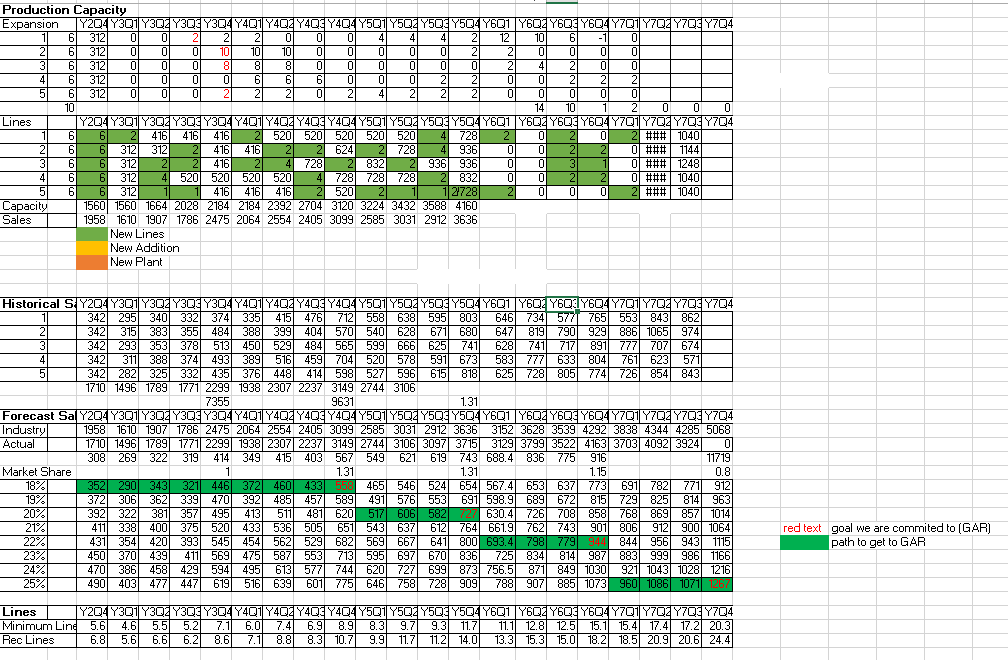
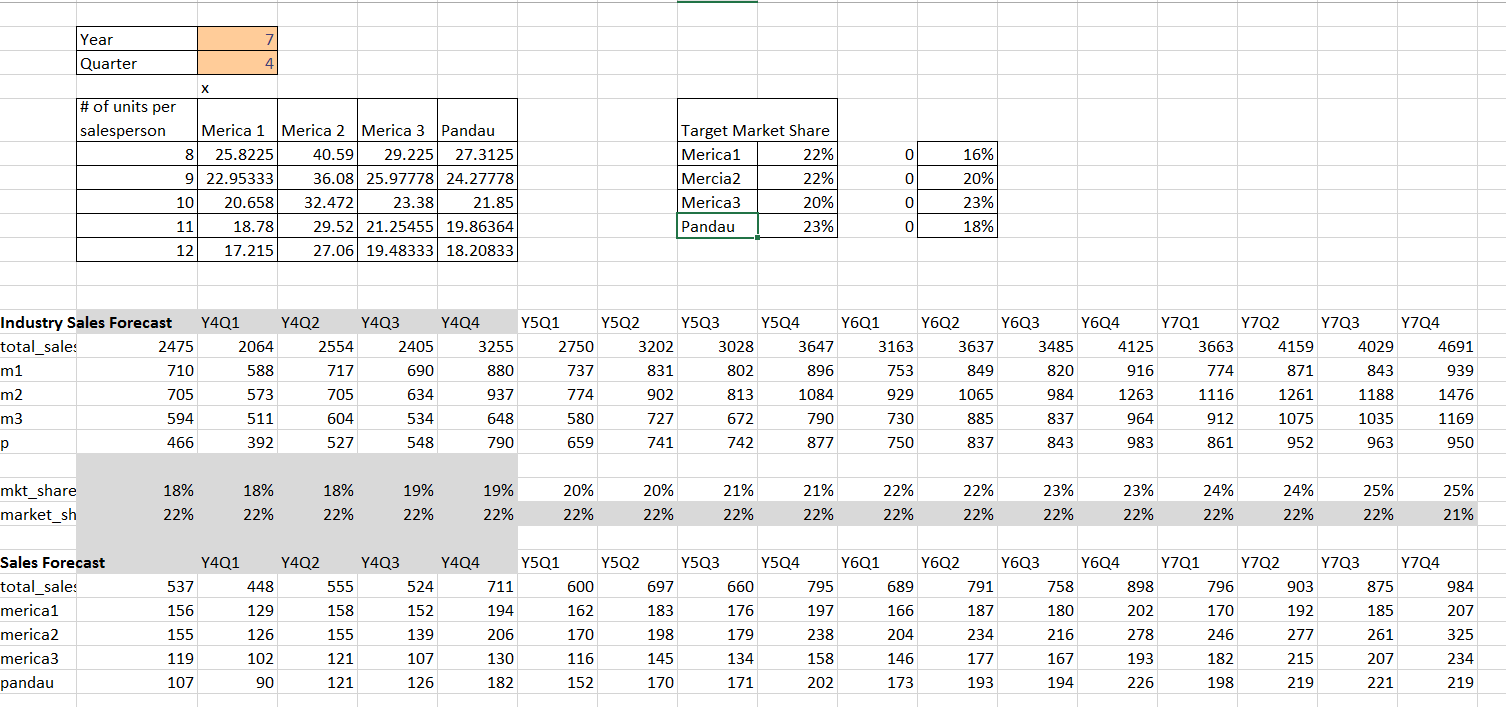
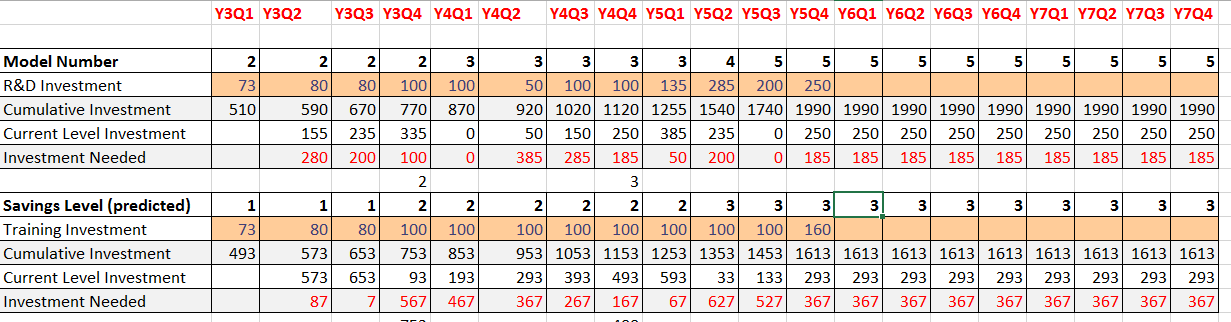
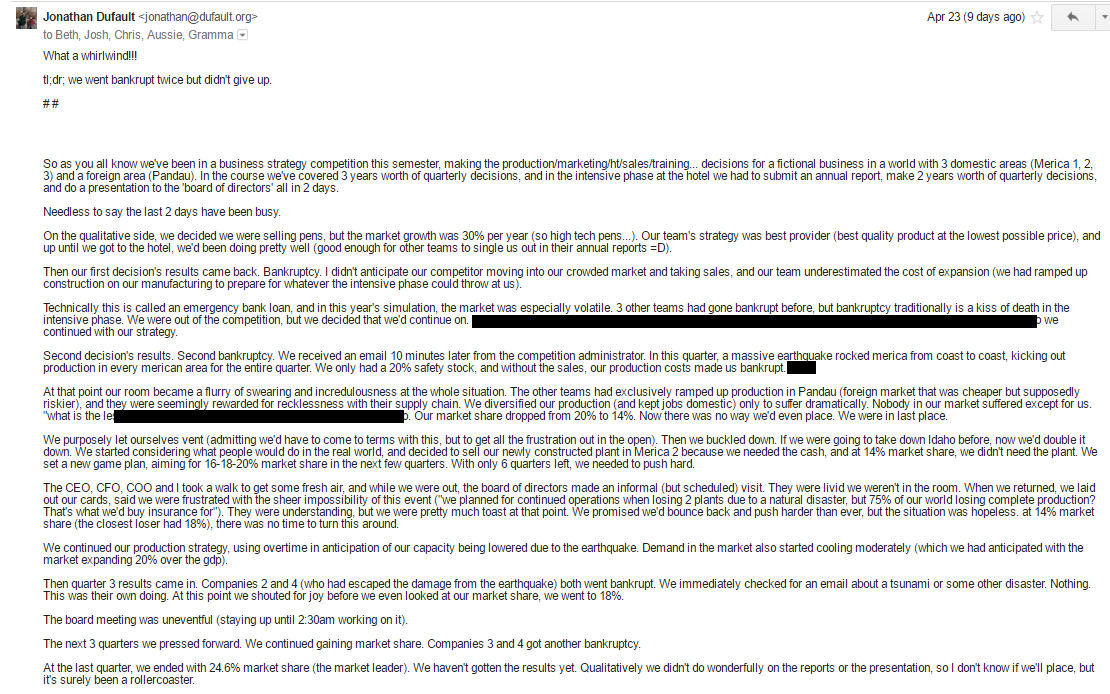
In Strategy is a Story I called our experience in the simulation analysis paralysis. By the end, that was fair. We had passed the point where we were able to make proactive changes but kept collecting data. It misjudged the beginning.
The early quarters taught us how the pricing levers worked, how marketing and demand modeling could help with production capacity. These observations were what made the forecasts possible. Reacting was the right move at the start. The mistake came later, when reacting had taught us enough to predict and we didn’t notice.
“I’m changing nothing for 90 days”
I’ve worked across multiple avenues in supply chain: retail stores, manufacturing, transportation, from the shop floor all the way to leading a team of data scientists. New leaders would come in and rotate. I knew when a good one came along from their first day.
The best leaders I saw entered the stores and operations, and often said some variation of: “I’m changing nothing for 90 days. I need to understand what’s happening.” Unnerving because they usually came into an operation that was on fire. At one retail job, the backroom was enormous but you couldn’t move because there were 30 pallets of product, toys thrown into shopping carts, clothes piled on top of boxes. In manufacturing, we were staring down losing half our production capacity because a filler kept going down for unplanned maintenance.
In transportation, a leader came in who had decades in the industry, from an organization much stronger than ours. However, he said he didn’t know enough yet to know what to change. He was willing to let observation overturn the plan that he brought with him.
The leaders still ran the operation, addressing the big three: safety/service/quality, but withheld discretionary changes. They would watch the actual process, the difference between what was documented and what was actually used. The one that would get the work done best.
A leader who arrives with a ready-made plan looks proactive, while acting on a fictional process.
CAPD before PDCA
In Six Sigma and Lean, a foundational methodology is a loop called PDCA: Plan Do Check Act. After Act you go back to Plan. At any level of the business, you have an idea of where you want to go, make plans to get there, enact them, check what actually happened, and act on course corrections. Rinse and repeat.
One that I learned about only when getting my Black Belt was CAPD, or CAPDo. Same verbs, same actions, but you start with the reaction. Scan the environment, react to anything that’s going wrong, make future plans based on what happened. Reactive management can be a four-letter word, but an improvement cycle is as valid when it begins with a Check of the current condition.
CAPD is improvement work when the first fact is that you don’t understand the process. When I was studying for the Black Belt exam, I went to the quality leader incredulous that they were teaching the CAPD cycle, and she wrote on a piece of paper:
CAPD CAPD CAPD CAPD CAPDCA... CA|PD ... PDCA PDCA PDCAEarly cycles are observation-led. Later ones are hypothesis-led. The bar works in both directions. When you realize that your mental model of the situation has deteriorated, then you shift into CAPD.
Starting PDCA too early makes a detailed plan for an imaginary process, and keeping CAPD too long turns disciplined observation into avoidance. A good mental model should be the goal when you’re running the ship. It’s okay to drift for a little while as you get there.
Root Cause Analyses
A concrete example of the interplay between proactive and reactive came when we were rethinking our existing system for RCAs in manufacturing. We had five main triggers for events that affected operations enough to warrant paying the thousand dollars to have a team of associates come off the floor and spend days to understand the foundational issues in our process that could cause them.
After research into RCAs, I found a book on applying them in education that categorized them into four buckets based off of two modalities.
| Reactive | Proactive | |
|---|---|---|
| Positive | What caused an existing success? | What roots must be established for future success? |
| Negative | What caused an existing failure? | What roots could obstruct future success? |
Paul G. Preuss, School Leader’s Guide to Root Cause Analysis.
We had been training our associates to think Reactive = we let something bad happen, and Proactive = we are doing good things, but the takeaway I got from this book was that proactive and reactive modalities were equally valid. Reactive for things you didn’t catch, proactive for things you’d like to do. Good and bad are in each bucket.
For us, RCAs were the bridge from reactive to proactive.
We filled the rest of the grid. If a line ran for a week with a mean time between failures well beyond expected, that warranted an RCA. As we matured in different departments, we enacted proactive RCAs as the bridge to the proactive cycle, dissecting and refining our mental model to understand how we wanted to change.
Reactive RCAs helped us build the mental model. Proactive ones helped us use it.
90 days
Being reactive is necessary to build a mental model. In the simulation we had made a strategic error, by being at the point where we had enough information to make predictions but staying in learning mode. I still believe that strategy is a story, and you need proactive plans to tell it.
Ninety days is an arbitrary standard, more metaphorical than anything. When you can understand what the next quarter is going to look like, more often right than wrong, then the 90 days are over. The hard part is noticing.